How Knowledge Graph News Is Transforming The Way We Consume Digital Information
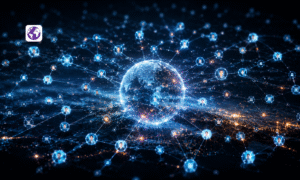
Right now, the online world shifts under fresh rules about data shape and delivery. Long ago, basic word hunts plus time-sorted streams kept us updated. Now, knowledge graphs in news bring sharper thinking into morning summaries. Stories once stood alone as flat lines of words – no longer true. Through networks linking figures, locations, groups, happenings, reports gain hidden layers before unseen. Old storage systems could never unlock such clear background sight.
This shift goes beyond updating old systems behind the scenes. Instead of facing a flat article, someone clicking on one of these stories steps into a web where each detail connects outward. Because facts tie back to larger pools of verified information, understanding grows naturally. From a sudden news alert, it becomes possible to trace backward – seeing context take shape through linked records. With links built into the structure, people move smoothly between now and what came before. Knowledge feels less scattered when pieces support one another like roots under soil.
The Framework Behind Today’s Data Flow
Looking closer at how this tech works changes everything. A knowledge graph builds a digital map of real-world connections. It sees the planet not as data but as linked facts. Each fact forms a small chain: someone does something to something else. For example, one person leads a nation sitting on a particular landmass. These links stack into meaning. News tools use those chains to sort articles by hidden context instead of obvious keywords alone. Patterns emerge when machines trace threads across continents and events. What slips past even sharp-eyed editors gets caught by tireless logic. Volume doesn’t blur the signal – it strengthens it.
Furthermore, this architecture enables a level of cross-referencing that enriches the reader’s experience. If a major corporate merger occurs, a graph-based system can instantly pull up the previous acquisitions of both companies, the regulatory hurdles they have faced in different jurisdictions, and the current market sentiment regarding their respective CEOs. This is the power of connected data. It transforms a static article into a dynamic portal. As these graphs grow more complex, they incorporate real-time data streams, ensuring that the relationships within the news ecosystem are always up to date and reflective of the current global state.
Enhancing Discovery and Reducing Misinformation
One of the most significant challenges in the digital age is the sheer volume of noise. Navigating through sensationalism to find factual clarity requires significant effort. Knowledge graph news serves as a vital tool in this struggle by prioritizing factual consistency. Because the system relies on a verified network of entities, it can quickly flag discrepancies. If a report surfaces claiming a specific event happened in a location that the graph knows is physically impossible or historically inconsistent with other verified facts, the system can alert editors to investigate further. This internal logic acts as a silent guardian of journalistic integrity.
Beyond fact-checking, this technology revolutionizes the discovery process for the audience. Traditional recommendation engines often trap users in “filter bubbles,” showing them more of what they have already clicked on. A graph-based approach, however, understands the “aboutness” of a story. It can suggest related topics that are intellectually linked but not necessarily identical in keyword. For example, if you are reading about a breakthrough in battery technology, the graph might lead you to a story about rare earth mineral mining in South America or a new policy regarding electric vehicle subsidies in Europe. This lateral discovery helps broaden the user’s perspective, encouraging a more holistic understanding of global affairs.
Personalization Without the Loss of Context
The ultimate goal of many media platforms is to provide a bespoke experience for every subscriber. Knowledge graph news makes this possible without sacrificing the shared reality that is necessary for a functioning society. By understanding the specific entities a user cares about—whether it is a particular industry, a local sports team, or a global social movement—the platform can curate a feed that feels deeply personal. Yet, because these stories are pulled from a unified graph, the user remains connected to the broader context. They aren’t just seeing isolated facts; they are seeing how their specific interests intersect with the rest of the world.
This level of personalization also extends to the format in which news is delivered. Semantic data allows for the automatic generation of summaries, timelines, and visual maps. A user who only has two minutes might receive a graph-generated timeline of a week-long summit, while a researcher might dive into the deep nodes of the graph to find primary source documents. This flexibility ensures that the information meets the user where they are, regardless of their technical expertise or time constraints. The intelligence of the graph ensures that the core “truth” of the story remains intact, even as the presentation changes to suit the individual.
Looking Toward a Connected Future
As we move deeper into an era defined by artificial intelligence and automated content, the importance of structured, verified data cannot be overstated. The integration of knowledge graph news into our daily lives is a major step toward a more organized and accessible world of information. We are moving away from the “black box” of algorithmic curation and toward a transparent, logic-based system of information distribution. This doesn’t just make the news easier to read; it makes the world easier to understand. By building bridges between disparate facts, we create a sturdier foundation for public discourse and individual learning.
The future of media lies in these connections. As more organizations adopt graph-based technologies, we will see a decline in fragmented reporting and a rise in comprehensive storytelling. The news will no longer be a series of fleeting moments but a continuous, evolving narrative where every update adds a new branch to the tree of human knowledge. This evolution ensures that even as the pace of the world accelerates, our ability to comprehend and synthesize that movement remains sharp. The web of information is growing, and with the right tools, we can finally see the full picture.